Sarcopenia: How to Prevent Muscle Loss and Stay Strong as You Age

aging and muscle loss

Why muscle loss matters more than you think—and what to do about it

Most people think aging shows up in wrinkles or gray hair.

It doesn’t.

It shows up when stairs feel harder, when energy drops, when balance gets shaky, when strength quietly slips year after year.

That process has a name: sarcopenia—the gradual loss of muscle mass and strength that begins earlier than most people realize and accelerates with age.

And while it’s rarely talked about outside of medical or fitness circles, it may be one of the most important drivers of long-term health, independence, and quality of life.


What Is Sarcopenia—Really?

Sarcopenia isn’t just “losing muscle.”

It’s a combination of:

  • Reduced muscle mass

  • Declining strength

  • Decreased muscle function

And those don’t always happen at the same rate.

You can lose strength faster than size. You can maintain body weight but lose muscle and gain fat. You can look “healthy” on paper and still be functionally declining.

This is why many people don’t notice sarcopenia early.

They notice it later—when:

  • Carrying groceries feels harder

  • Getting up from a chair takes effort

  • Workouts feel stagnant or regress

  • Recovery slows down

The change is gradual, but the impact is significant.


When Does Muscle Loss Start?

Earlier than most people expect.
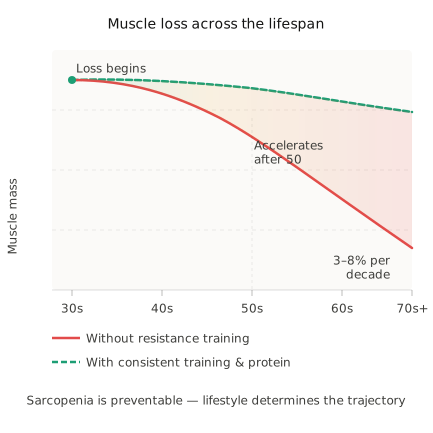
  • Muscle loss can begin in your 30s

  • It tends to accelerate after 50

  • Without intervention, people can lose 3–8% of muscle per decade, with faster declines later in life

But here’s the important part:

It’s not inevitable.

Sarcopenia is heavily influenced by lifestyle—particularly how you train, eat, and recover.


Why Muscle Matters (Far Beyond Appearance)

Muscle is often framed as aesthetic.

That’s a mistake.

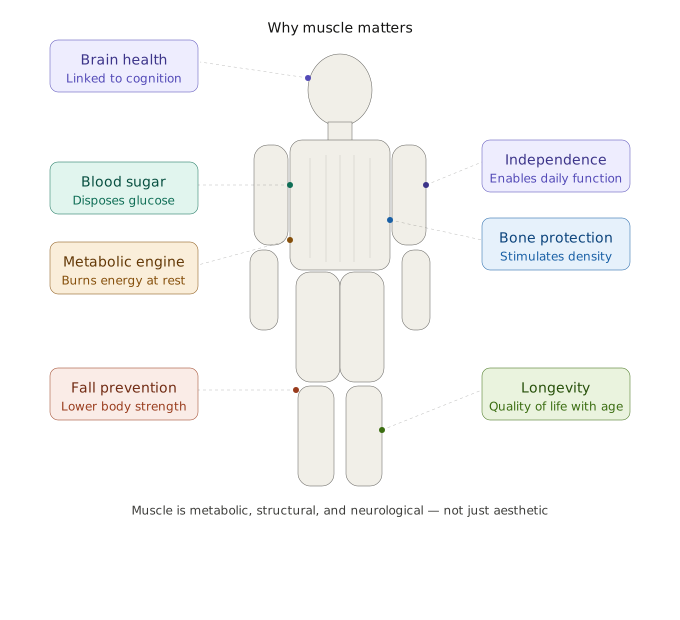
Muscle is one of the most metabolically and functionally important tissues in your body.

1. Muscle Is Your Metabolic Engine

Muscle tissue burns energy at rest and plays a central role in regulating metabolism. Less muscle often means a slower metabolic rate over time.

2. Muscle Regulates Blood Sugar

Muscle acts as a glucose disposal system, helping pull sugar out of the bloodstream. Lower muscle mass is strongly associated with insulin resistance and metabolic disease.

3. Muscle Protects Your Bones

Strength training stimulates bone density. Losing muscle often means losing bone integrity, increasing fracture risk.

4. Muscle Prevents Falls and Injury

Strength—especially in the lower body—is one of the biggest predictors of fall risk as people age.

5. Muscle Supports Cognitive Health

Emerging research continues to link muscle mass and strength with brain health and cognitive function.

6. Muscle Determines Independence

At a certain point, strength becomes the difference between living independently and needing assistance.

People think aging is about appearance.
It’s really about capacity.


The Hidden Drivers of Sarcopenia

Muscle loss doesn’t just “happen.” It’s driven by consistent inputs over time.
1. Inactivity

This is the biggest one.

If you’re not regularly exposing your body to resistance, your body has no reason to maintain muscle tissue.

2. Low Protein Intake

Many adults—especially as they age—don’t eat enough protein to support muscle maintenance, let alone growth.

3. Chronic Dieting

Repeated calorie restriction without proper training signals can accelerate muscle loss.

4. Overemphasis on Cardio

Endurance training has benefits, but it does not provide enough stimulus to preserve or build muscle on its own.

5. Hormonal Changes

  • Women experience a decline in estrogen after menopause

  • Men experience gradual declines in testosterone

These changes can influence muscle retention—but they don’t override lifestyle.

Mechanical tension still rules.


Early Warning Signs Most People Miss

Sarcopenia doesn’t announce itself loudly. It shows up subtly at first.

Look for:

  • Decreasing grip strength

  • Difficulty standing up from a chair without using hands

  • Reduced training loads over time

  • Slower recovery between workouts

  • Persistent fatigue

  • Feeling “weaker” despite staying active

One of the clearest signs:

You’re not progressing.

If you’re lifting the same weights at 55 that you were at 40—not by design, but because you never built beyond that—that’s not maintenance.

That’s decline.


How Is Sarcopenia Measured?How sarcopenia is measured

There are a few ways to assess it:

Body Composition (DEXA, InBody)

These can estimate muscle mass—but they don’t tell the full story.

Strength Testing

This is often more important.

  • Grip strength

  • Sit-to-stand tests

  • Loaded movement capacity

Functional Performance

How you move, carry, lift, and stabilize matters more than what a scan says.

Function > aesthetics. Always.


Can You Prevent—or Reverse—Sarcopenia?

Yes.

And this is where most people underestimate what’s possible.

1. Resistance Training (Non-Negotiable)

This is the most effective intervention.

  • 2–4 days per week

  • Focus on progressive overload

  • Prioritize compound movements

  • Train through full ranges of motion

Walking is not enough. Cardio is not enough.

Your body needs a reason to keep muscle.

2. Adequate Protein Intake

Most adults need more than they think—especially as they age.

A practical target:

  • ~0.7–1.0g of protein per pound of body weight, adjusted for individual context

Spread across meals. Consistently.

3. Recovery and Sleep

Muscle isn’t built during workouts—it’s built during recovery.

Poor sleep = impaired muscle repair.

4. Creatine (When Appropriate)

One of the most studied and effective supplements for supporting strength and muscle retention.

(Not for everyone—discuss with your provider.)

5. Long-Term Consistency

This is where most people fail.

Muscle isn’t built in 6 weeks.
It’s defended over decades.


The Biggest Mistakes People Make

“I walk every day—that’s enough.”

It’s not.

Walking is great for general health, but it does not provide the stimulus needed to maintain muscle mass and strength.

“I’m trying to lose weight.”

Weight loss without a strength plan often leads to muscle loss.

That makes the long-term problem worse.

“I don’t want to get bulky.”

This fear prevents people from doing the exact thing they need most.

Muscle loss—not muscle gain—is the real risk.

“I’ll focus on this later.”

Later is when it’s harder.

Much harder.


What Should You Do Right Now?

If you’re 40 or older—or approaching it—this is the window where action matters most.

Start with three priorities:

  1. Lift weights consistently

  2. Eat enough protein to support muscle

  3. Track your strength over time

Not obsessively. But intentionally.

Because what you build now—or fail to build—will show up later.


The Bottom Line

Sarcopenia is not just a fitness issue.

It’s a longevity issue.
A metabolic issue.
A quality-of-life issue.

And most importantly—it’s a controllable one.

Aging is mandatory.
Weakness is not.

If you’re unsure where to start—or want a structured, joint-safe plan to build strength and protect your long-term health—our team at Active Health can help.

Schedule an assessment and take the first step toward building strength that lasts for decades.

How to Improve Sleep Quality and Duration (Science-Backed Tips)

Improve Sleep Quality

Sleep is one of the most powerful—and most overlooked—drivers of health. 

Most people focus on how many hours they spend in bed, but sleep scientists point out that sleep quality matters just as much as sleep duration. The goal isn’t simply to be unconscious for eight hours. It’s to allow the brain and body to move smoothly through the sleep cycles that restore energy, regulate metabolism, strengthen memory, and support immune function. 

When those cycles are disrupted, even a long night in bed can leave you feeling tired the next day. 

The encouraging news is that improving sleep doesn’t usually require complicated technology or medications. Research consistently shows that a handful of simple, repeatable habits can dramatically improve both sleep quality and sleep duration over time. 

Here’s what the science says actually works. 

Why Sleep Quality Matters 

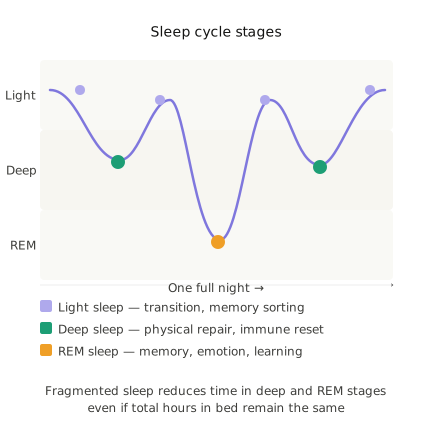
Sleep is not a single state. During the night, your brain cycles through several stages of sleep, including: 

Light sleep 

Deep (slow-wave) sleep 

REM sleep 

Each stage plays a different role in recovery. 

Deep sleep is where much of the body’s physical restoration occurs. Growth hormone is released, tissues repair, and the immune system resets. REM sleep is essential for memory consolidation, emotional processing, and learning. 

If sleep is fragmented—because of stress, light exposure, alcohol, or irregular schedules—you may spend less time in these deeper stages even if you’re technically asleep for many hours. 

That’s why improving sleep quality often leads to better energy, sharper focus, improved metabolism, and better mood. 


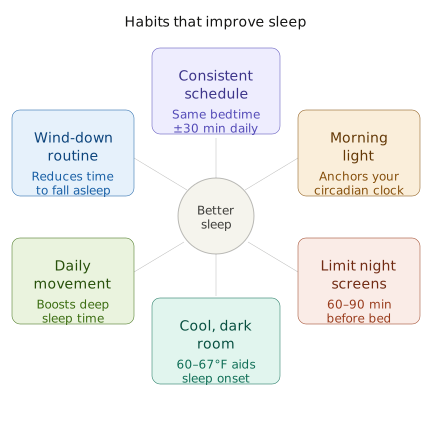
  1. Keep a Consistent Sleep Schedule

Your body operates on an internal timing system known as the circadian rhythm. This internal clock regulates the release of sleep hormones like melatonin and wakefulness signals like cortisol. 

When you go to bed and wake up at inconsistent times, the circadian rhythm becomes less predictable. Research shows that irregular sleep schedules are associated with poorer sleep quality, shorter total sleep time, and greater daytime fatigue. 

Think of your sleep schedule the way you would think about meal timing or exercise: consistency allows your body to prepare for the event. 

When your brain expects sleep at a certain time, melatonin begins rising naturally and the body gradually transitions into a sleep-ready state. 

Tip:
Aim to go to bed and wake up within 30–60 minutes of the same time every day, including weekends when possible. 


  1. Get Morning Light — and Limit Night Light

Light is the strongest signal that regulates your circadian rhythm. 

Exposure to natural light in the morning helps anchor the body’s internal clock. It tells your brain that the day has started and helps set the timer for when melatonin should begin rising again that evening. 

On the other hand, exposure to artificial light at night—especially blue light from screens—can delay the release of melatonin and make it harder to fall asleep. 

A landmark study published in PNAS found that using light-emitting devices before bed delayed sleep onset, reduced REM sleep, and increased next-day fatigue. 

The issue isn’t just the screen itself—it’s the timing and brightness of light exposure. 

Tip: 

Get outside within 30–60 minutes of waking if possible 

Reduce bright lighting in the evening 

Avoid phones, tablets, and TVs 60–90 minutes before bed 


  1. Create a Wind-Down Routine

Many people try to go from full mental activity—emails, social media, work stress—directly into sleep. 

Unfortunately, the nervous system rarely works that way. 

Your body benefits from a predictable signal that the day is ending and sleep is approaching. Research shows that relaxing pre-sleep routines can reduce the time it takes to fall asleep and increase sleep depth. 

The goal is not to force sleep, but to gradually shift the nervous system toward a calmer state. 

Simple routines often work best. 

Examples include: 

Reading a physical book 

Light stretching or mobility work 

Slow breathing exercises 

Journaling or writing down the next day’s to-do list 

These activities help reduce mental stimulation and give the brain a clear cue that it is safe to transition toward rest. 

Tip:
Keep your wind-down routine consistent and screen-free whenever possible. 


  1. OptimizeYour Sleep Environment 

Your sleep environment has a surprisingly large impact on sleep quality. 

Research suggests that cooler room temperatures—typically between 60–67°F (16–19°C)—support better sleep efficiency. As your body prepares for sleep, your core temperature naturally drops. A cooler environment helps facilitate that process. 

Darkness is also essential. Even small amounts of light can disrupt melatonin production and reduce time spent in deeper sleep stages. 

Noise can be another hidden disruptor. Even if you don’t fully wake up, sound disturbances can fragment sleep cycles. 

Tip: 

Consider optimizing your sleep environment with: 

Blackout curtains or eye masks 

White noise or fans to reduce sound disruptions 

Breathable bedding 

A slightly cooler room temperature 

Small changes here can make a significant difference over time. 


  1. Watch Caffeine, Alcohol, and Late Meals

What you consume—and when you consume it—can have a major effect on sleep. 

Caffeine 

Caffeine blocks adenosine, a chemical that builds sleep pressure throughout the day. Because caffeine has a relatively long half-life, it can disrupt sleep even 6–8 hours after consumption. 

Tip:
Avoid caffeine after early afternoon if sleep is a struggle. 

Alcohol 

Alcohol can make people feel sleepy initially, but it disrupts REM sleep and increases nighttime awakenings, leading to poorer overall sleep quality. 

Late Meals 

Large meals close to bedtime can stimulate digestion and increase body temperature, both of which may interfere with falling asleep. 

Tip:
Try to finish heavier meals at least 3 hours before bedtime. 


  1. Move Your Body—Preferably Earlier in the Day

Regular physical activity is one of the most reliable lifestyle interventions for improving sleep. 

Research has shown that exercise can increase: 

Total sleep time 

Sleep efficiency 

Time spent in deep sleep 

Physical activity helps regulate circadian rhythm, reduce stress, and increase sleep pressure by the end of the day. 

That said, very intense exercise close to bedtime can feel stimulating for some people, particularly if it raises heart rate and core temperature. 

The effect varies from person to person. 

Tip:
Aim for regular movement during the day and experiment to see how evening exercise affects your sleep. 


When Sleep Problems Persist 

While lifestyle changes can significantly improve sleep for many people, persistent sleep problems may indicate an underlying issue. 

Conditions such as sleep apnea, chronic insomnia, circadian rhythm disorders, or high levels of stress and anxiety can all interfere with healthy sleep cycles. 

If you regularly experience: 

Loud snoring or gasping during sleep 

Persistent daytime fatigue despite adequate time in bed 

Difficulty falling or staying asleep for long periods 

It may be worth discussing sleep with a healthcare professional. 

Sleep is not just a comfort—it’s a fundamental part of long-term health. 


The Bottom Line 

Improving sleep doesn’t require perfection. 

It requires consistency. 

Small, repeatable habits—keeping a regular schedule, getting morning light, limiting screens at night, creating a wind-down routine, and staying physically active—can significantly improve both sleep quality and sleep duration over time. 

Better sleep supports nearly every aspect of health, from energy and focus to metabolism and immune function. 

And often, the most effective improvements come not from drastic changes, but from simple habits practiced consistently. 

Sleep is one of the most powerful—and most overlooked—drivers of long-term health. If you’re struggling with energy, recovery, weight, or focus, improving your sleep is often the first place to start.

At Active Health, we help patients take a structured, personalized approach to their health—including sleep, nutrition, and physical performance—so you’re not guessing at what to do next.

If you’re ready to feel better, perform better, and take control of your health, schedule an introductory call with our team.